
Papers & Publications
Read our open-access papers to see how we approach to solving cutting-edge problems in engineering.
Open Models, Open Minds: Sharing CFD Knowledge Through Open Access
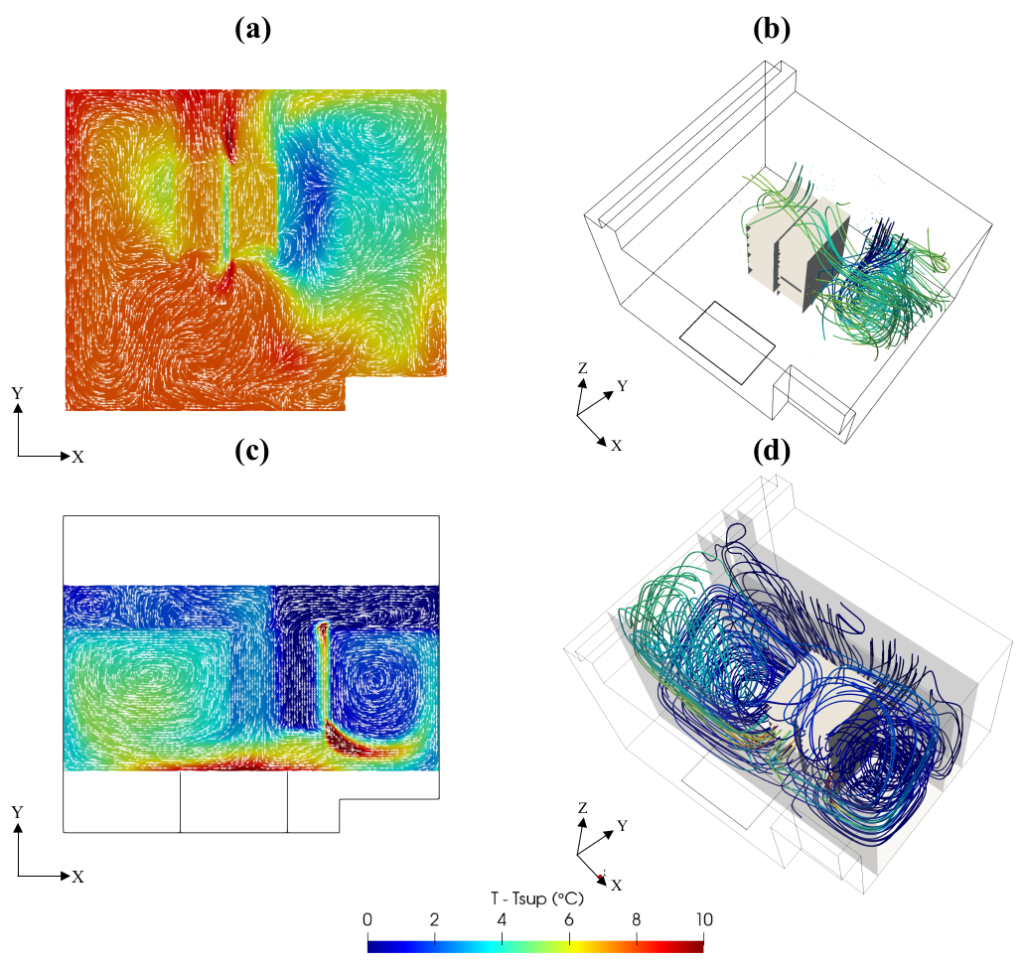
Energy Efficiency Enhancement in Two European Data Centers Through CFD Modeling
We are pleased to announce the publication of our open-access article titled “Energy Efficiency Enhancement in Two European Data Centers Through CFD Modeling” in Scientific Reports. This study was conducted within the framework of the HEATWISE project and focuses on the use of validated Computational Fluid Dynamics (CFD) simulations to assess and improve the energy efficiency of existing data centers. By applying KPI-based evaluations aligned with the European Energy Efficiency Directive, the study demonstrates how retrofitting strategies such as optimized rack layouts and airflow management can enhance performance by up to 75%. The methodology developed in this work offers a replicable approach for guiding energy-efficient upgrades in data centers across Europe.
Highlights
- Focused on two European pilot data centers located in Denmark and Poland
- Combined experimental measurements with validated CFD simulations of airflow and thermal distribution
- Used Key Performance Indicators (KPIs) to evaluate energy efficiency in line with the European Energy Efficiency Directive
- Demonstrated that retrofitting strategies such as optimized rack positioning, airflow containment, and guided airflow control can significantly improve efficiency
- Achieved up to 75% improvement in specific KPIs through numerical optimization
- Established a generalizable methodology for performance assessment and retrofitting of existing data centers using simulation-based tools

Development and Optimization of a Micro-Baffle for the Enhancement of Heat Transfer in Film Boiling
We are proud to announce the publication of our latest research paper, “Development and Optimization of a Micro-Baffle for the Enhancement of Heat Transfer in Film Boiling,” a key achievement under the EU-funded HEATWISE project. This work demonstrates our innovative approach to advancing heat transfer efficiency through two-phase Computational Fluid Dynamics (CFD) simulations.
Highlights
- Achieved a 57.4% improvement in the Nusselt number
- Increased critical heat flux (CHF) by 66.4%
- Enabled continuous bubble formation at reduced temperature differences, leading to significant energy efficiency gains

A Power Model for OCP Servers
We are excited to announce the publication of our latest research paper, “Development of a Power Model for OCP Servers based on IPMI Data,” now available on Zenodo. This research is part of our commitment to developing innovative solutions for energy-aware IT management. Our work contributes to optimizing energy usage, reducing costs, and promoting environmental sustainability in data centers and modern computing systems.
Highlights
- Conducted at the Empa data center, our experiments measured server power consumption and CPU temperatures under various conditions.
- Notable findings include significant temperature differences between CPUs at different fan speeds and a substantial drop in power consumption due to hyper-threading when server utilization exceeds 0.5.
- The proposed equations accurately predict server power consumption, providing a reliable tool for enhancing energy efficiency in data centers.
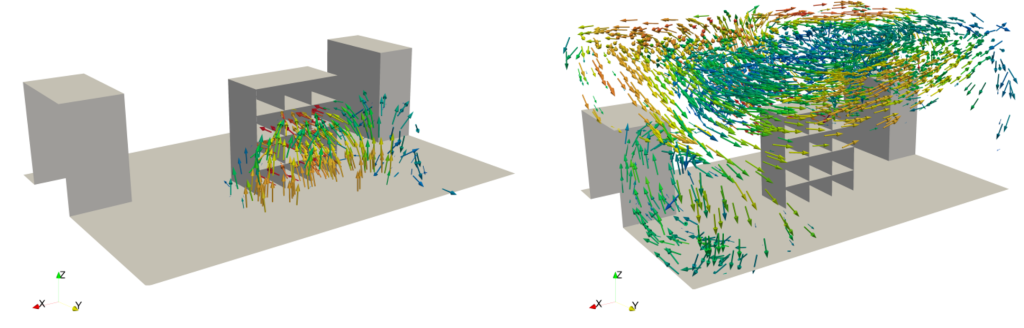
Dynamic cooling of an air-cooled data center under transient workloads
We have published a research paper on the numerical investigation of dynamic-cooling under transient workloads.
Highlights
- Thermal response and cooling efficiency of an operating data center are investigated under generated workload trends
- New metrics were proposed for assessment of recirculation and leakage effetcs in a data center.
- Power consumption by the cooling can be reduced by 10% when dynamic cooling approach was adopted
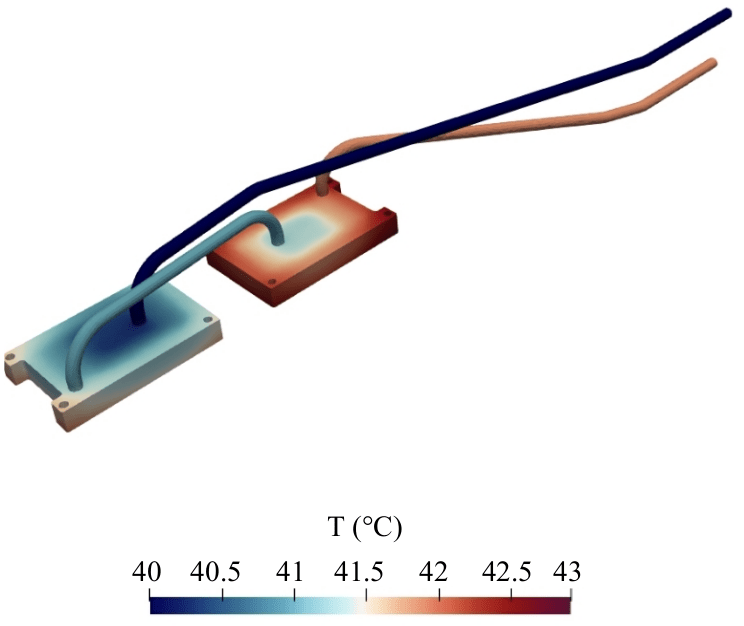
Conjugate Heat Transfer Modeling of a Cold Plate Design for Hybrid-Cooled Data Centers
Together with Blockheating we have published a research paper for the Conjugate Heat Transfer (CHT) modeling of chip to cooling of Open Compute Project (OCP) server.
Highlights
- A CHT model was developed for the thermal simulation of cold plate.
- A novel empirical equation is proposed for the prediction of heat transfer from the CPU to the air.
- The simulation results reveal that the proposed compact model can be used reliably for the thermal simulation of a hybrid-cooled data center.
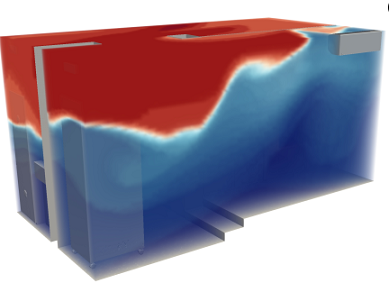
Retrofitting of an air-cooled data center for energy efficiency
Together with Radius Solution Center and Lande, we have published a research paper on the cooling improvement of an air-cooled data center based on Computational Fluid Dynamics (CFD) simulations.
Highlights
- Thermal and cooling efficiencies of an air-cooled data center were investigated by means of CFD simulations.
- The numerical model was validated with the temperature measurements conducted in the data center
- Efficiency of the data center has improved by 47.2% with respect to the RCI (Rack Cooling Index).

CFD Modeling of Pressure Drop through an OCP Server for Data Center Applications
We have published a research paper on the modeling of pressure drop through OCP servers by means of CFD simulations.
Highlights
- Turbulent flow through an OCP server was fully resolved.
- A fast and accurate approach was proposed for the prediction of pressure drop.
- The present model can effectively be used for the fast and accurate prediction of pressure drop inside a server.

Development and validation of an open-source CFD model for the efficiency assessment of data centers
We have published a research paper on the development of an open-source CFD model for the thermal simulations of air-cooled data center.
Highlights
- An open-source computational fluid dynamics (CFD) model was developed based on OpenFOAM libraries.
- The numerical model can be reliably used for the efficiency assessment of air-cooled data centers.
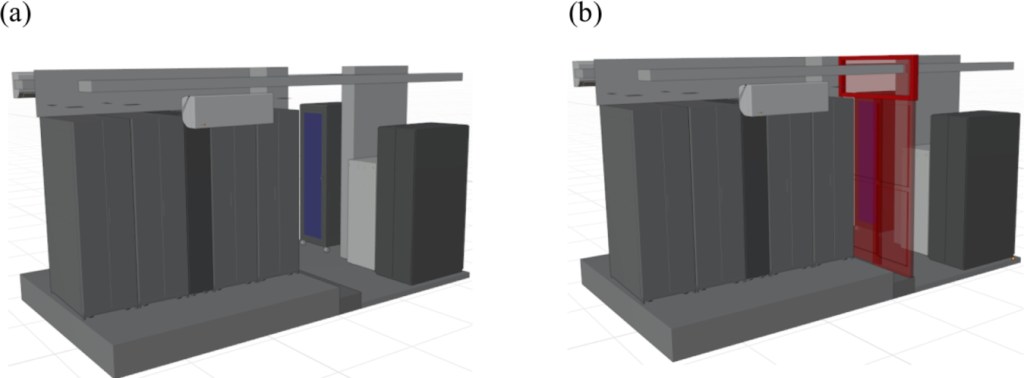
Numerical and experimental dataset for a retrofitted data center
We have published a research paper on the numerical and experimental data set for an air-cooled data center.
Highlights
- The experimental data contains the exhaust temperature profile obtained from an experimental campaign and the numerical data contains OpenFOAM and script files for the simulation of the thermal structure based on the experimental study.
- Flow and thermal structures inside the data center are exhibited using the validated numerical model
